

There is a powerful need for symbolism, and that means the architecture must have something that appeals to the human heart.
Kenzo Tange
  Once upon a time,
a pilgrim was walking to Santiago de Compostela as many pilgrims have done over the centuries. This pilgrim had the misfortune of arriving in Barcelos the same day that the silver had been stolen from an important, wealthy man.

A stranger with no one to vouch for him, the pilgrim was as poor as he was pious and truly had nothing but his own word in his defense. He was also the only suspect. So it came to pass that he was promptly arrested, convicted and sentenced to death by hanging.

The day he was scheduled to be hanged, he begged so earnestly for one last chance to plead with the judge that the guards took pity on him and took him to the judge’s house. The judge was having a dinner party that evening, and there were guests in their finest attire, and a great feast was laid out on the table. Unwashed, disheveled, and shackled, the pilgrim threw himself on the judge's mercy. It was to no avail. The judge declared that the hanging would go on as planned.

Just as the guards were going to take the pilgrim away, he pointed to the roasted chicken on the table and looked the judge right in the eyes as he said, “As truly as I tell you I am innocent, I tell you now that this cock will crow three times at the moment I am hanged.” The dinner guests all laughed at this ridiculous claim, and the pilgrim was taken directly to the gallows.

Much to the shock of the judge and his guests, the roast chicken did stand up and crow, not once, not twice, but three times. Realizing he’d sent an innocent man to his death, the judge ran from his house to the gallows, praying it wasn’t too late.

Though the executioner had attempted to hang the pilgrim, a flaw in the rope saved his neck. They were just setting up for a second attempt when the judge arrived and insisted that the pilgrim be set free at once.
And so it is that this rooster, Galo de Barcelos, has become a symbol of faith and justice and of Portugal itself. Like any oral tradition, there are countless small variations, but also details that remain consistent. Colorfully painted figurines of this rooster can be found in gift shops carrying Portuguese kitsch and they are supposed to bring good luck to your home.
Studying abroad is a strange space, somewhere between visiting a place and living there. I lived my life in Portugal the same way as in California. I went to my classes. I hung out with my friends. I ran errands. I did chores. I worked from home. Sometimes, I say I lived there because my daily life was very real and very there. Sometimes, I say I visited because I still had a home in California that I knew I’d return to. However you phrase it, I was there long enough and involved enough, that I can’t help but feel some affiliation- like Portugal is partly mine and I am partly Portugal’s.
There are symbols of that place that I greet like old friends now. I’m so happy to see them, even if they make me a little homesick for a place I never quite called home. Of course, there is the rooster. There is also the ornate Manueline architecture that is so distinctly Portuguese. And the flexible cork that they use like leather to make purses and backpacks, and from which the little coin purse I bought in Lisbon is made.
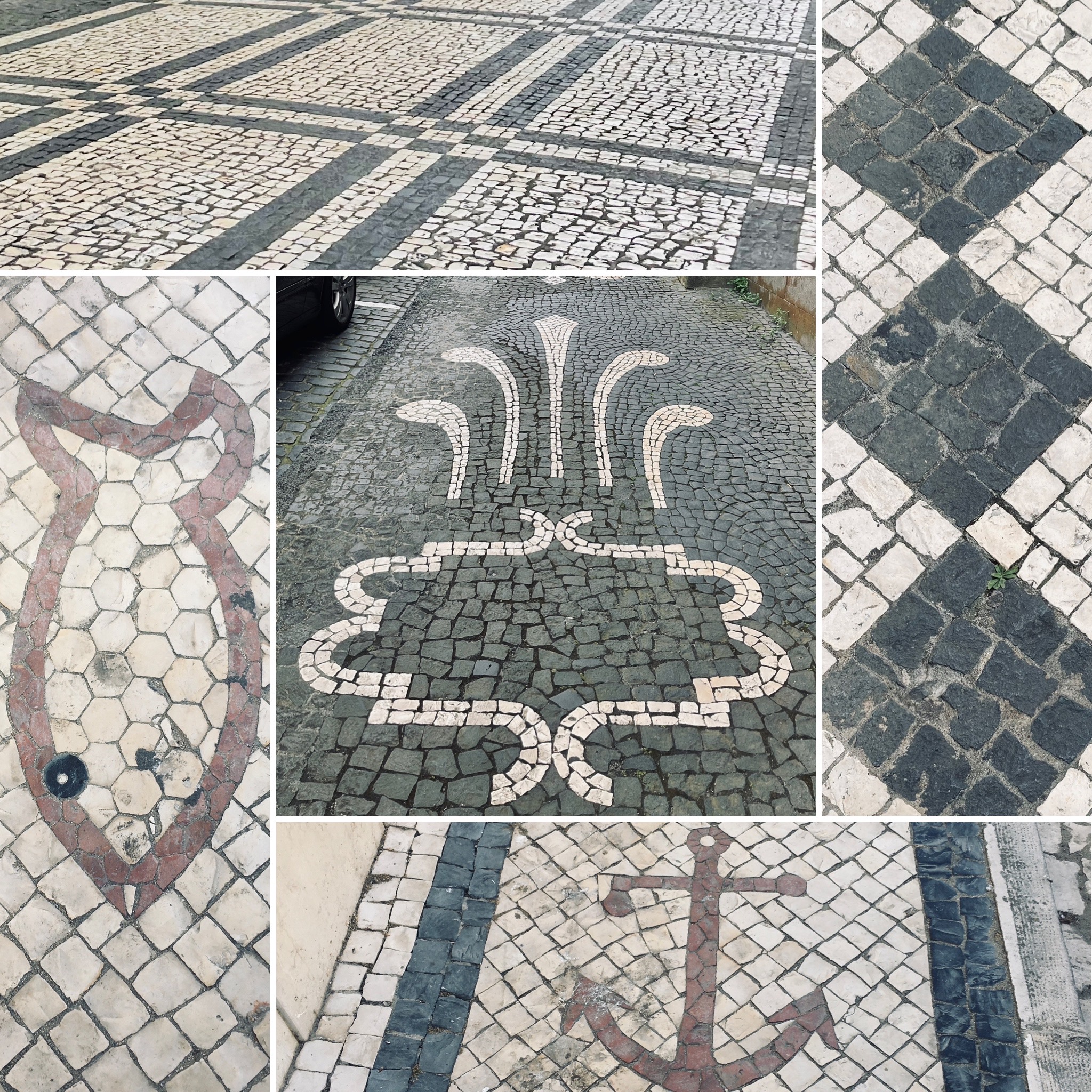
Portuguese pavement is my favorite, though. I still marvel that the Portuguese can get anywhere on foot, mostly because the sidewalks are so stunning that I wanted to stop and admire them every few steps and also because they have worn quite smooth in some places after centuries of people walking on them. They can be treacherously slippery, especially in hilly Lisbon.


The Azores have all the symbols of Portugal and some of their own. The hydrangeas were very showy while I was there in June. Between the live ones in full bloom, the delicately embroidered ones on tea towels and aprons, and representations on postcards and magnets and anything else you could hope to buy in a souvenir shop, it’s hard to hate on them. Unfortunately, they are as invasive as they are iconic.
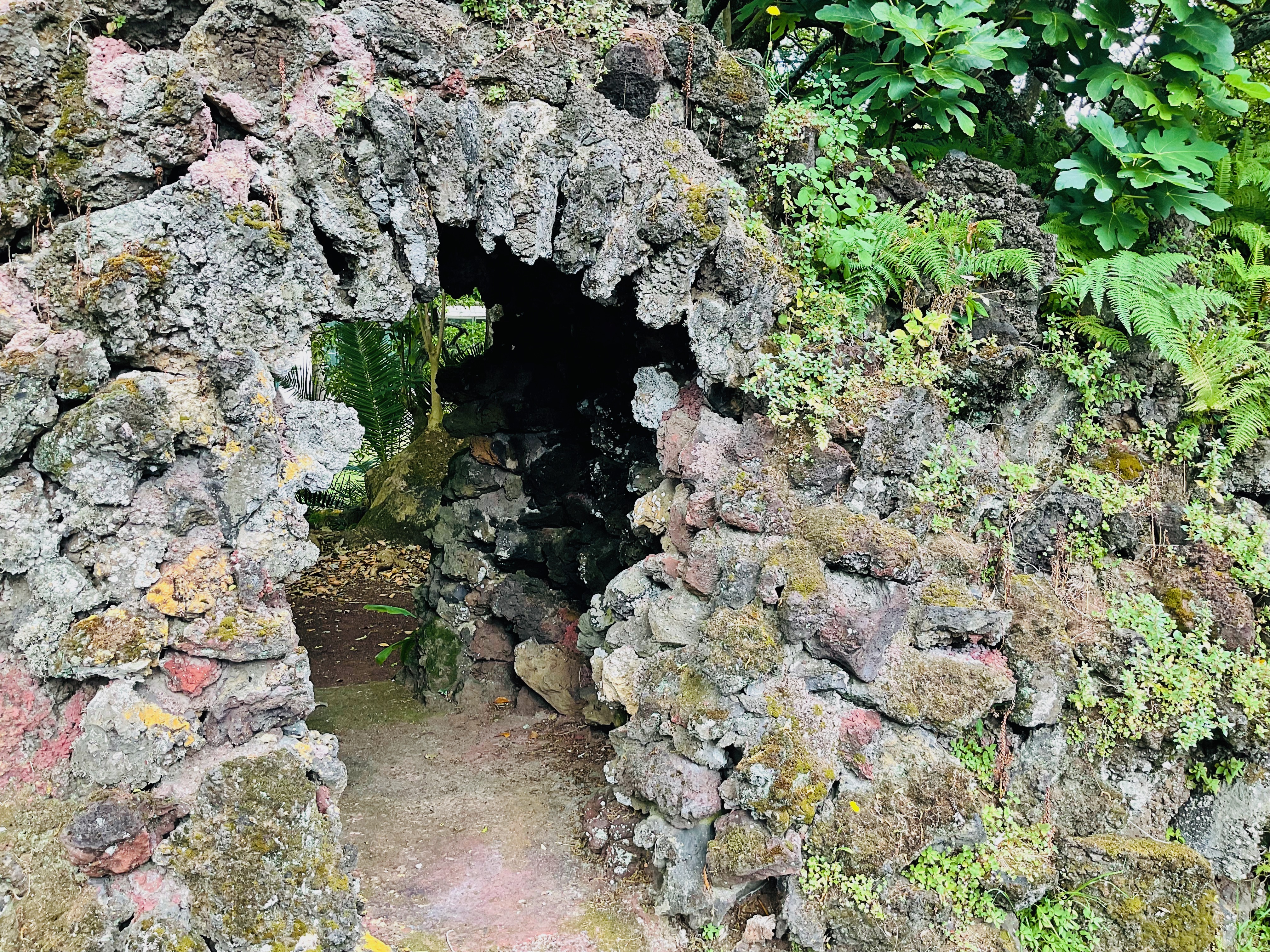
Romantic gardens still abound on the island of São Miguel. The local economy flourished in the 19th century, and wealthy merchants wanted to emulate nobility. There’s a certain recipe to follow for these gardens, beyond just having exotic plants. They took one of these, one of those, carefully curating specimens and completing collections. There are no ancient ruins on the island of São Miguel, on account of not being settled by humans until the 15th century. That’s okay, if you can’t grow your own ruins or grottos, custom-built is fine. More than a century later, some are rather convincing, too.
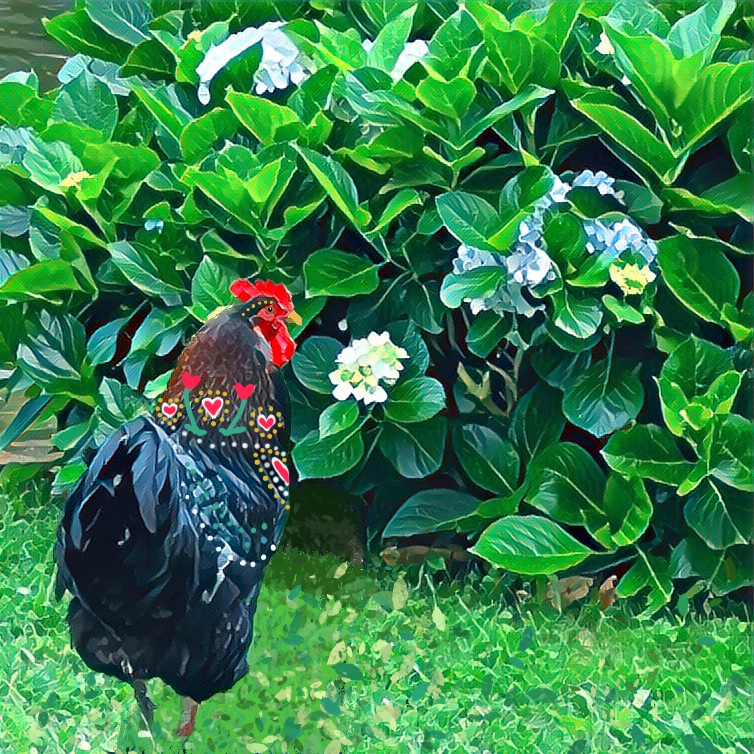
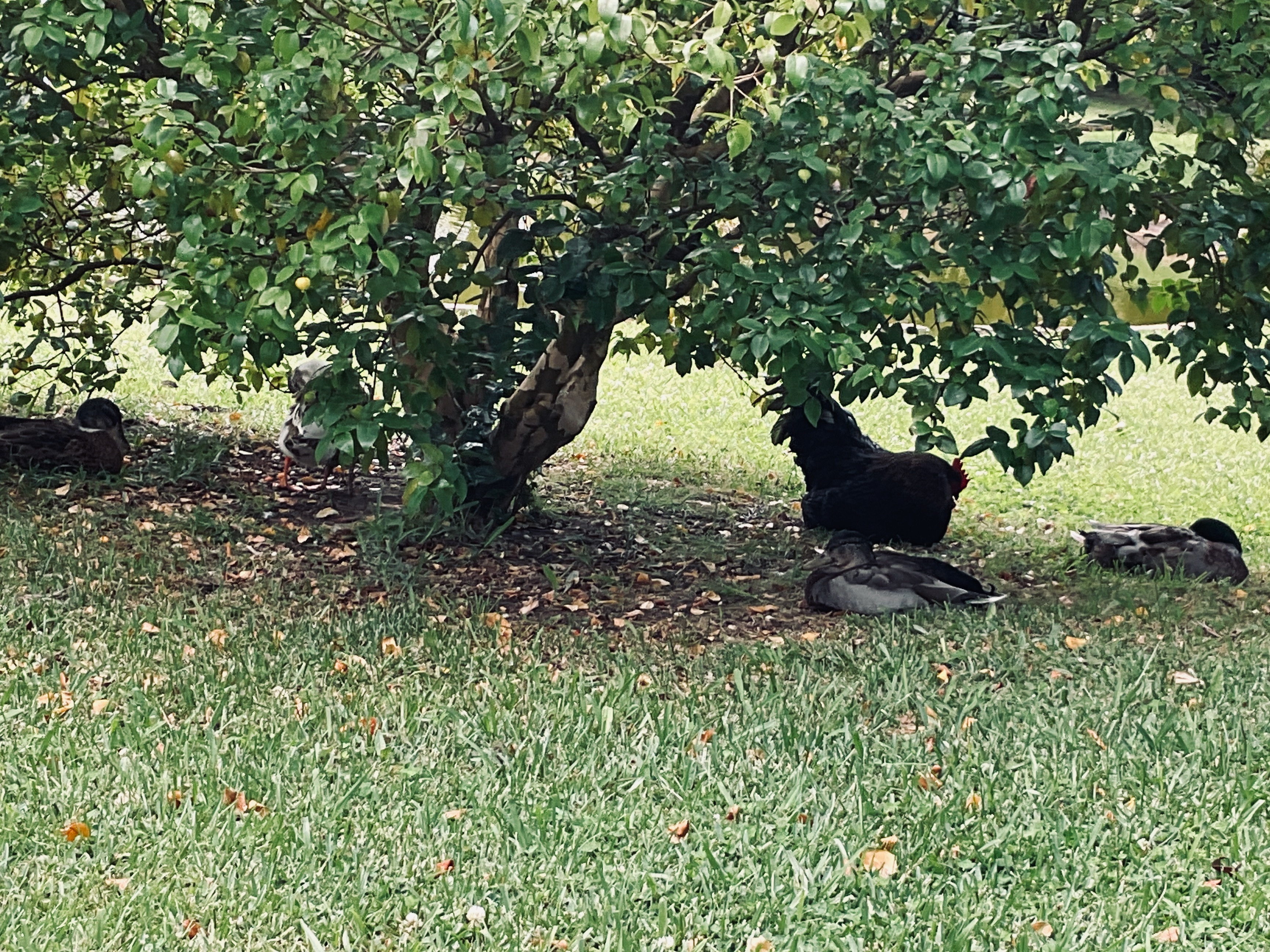
The university where I attended classes has its own romantic garden, and lush hydrangeas (and modern facilities too). Best of all was the one big, black, rooster whose strutting presence on the grounds, compounded by the souvenir tchotchkes, sent me down the Galo de Barcelos rabbit hole in the first place. I just had to know what the Portuguese obsession with roosters was all about.
I never did believe in miracles
Fleetwood Mac
But I’ve a feeling it’s time to try
I never did believe in the ways of magic
But I’m beginning to wonder why
You Make Loving Fun


Leave a comment